

The Doing Nothing Paradox: Why We Feel Guilty When We Finally Rest
.avif)
The Doing Nothing Paradox: Why We Feel Guilty When We Finally Rest
The greatest obstacle to rest is not the absence of time, but the presence of guilt.
Modern people dream of having time to themselves. Yet when they finally have it, they feel uncomfortable.
They cannot relax.
They cannot simply be.
Instead, the mind whispers:
You should be answering emails.
You should be working out.
You should be helping your family.
You should be making money.
You should be doing something productive.
Ironically, we possess complete freedom to do nothing.
Nobody is forcing us to work.
Nobody is chasing us.
The prison is internal.
The jailer is guilt.

The Paradox
We crave freedom, but when freedom arrives, we become anxious.
The very moment life gives us permission to rest, we invent reasons why we shouldn't.
The result is extraordinary.
We spend our lives working so that one day we may rest.
Then when rest finally comes—
we feel guilty for resting.
.avif)
Panchakarma
This is why Panchakarma feels so strange to first-time guests.
Nothing much happens.
A treatment.
A meal.
A walk.
A nap.
Some reading.
Some silence.
Some staring at coconut trees.
And suddenly the Western mind begins to panic.
"Am I wasting my money?"
"Shouldn't there be more activities?"
"Should I check my emails?"
No meetings.
No errands.
No deadlines.
No obligation to improve ourselves.
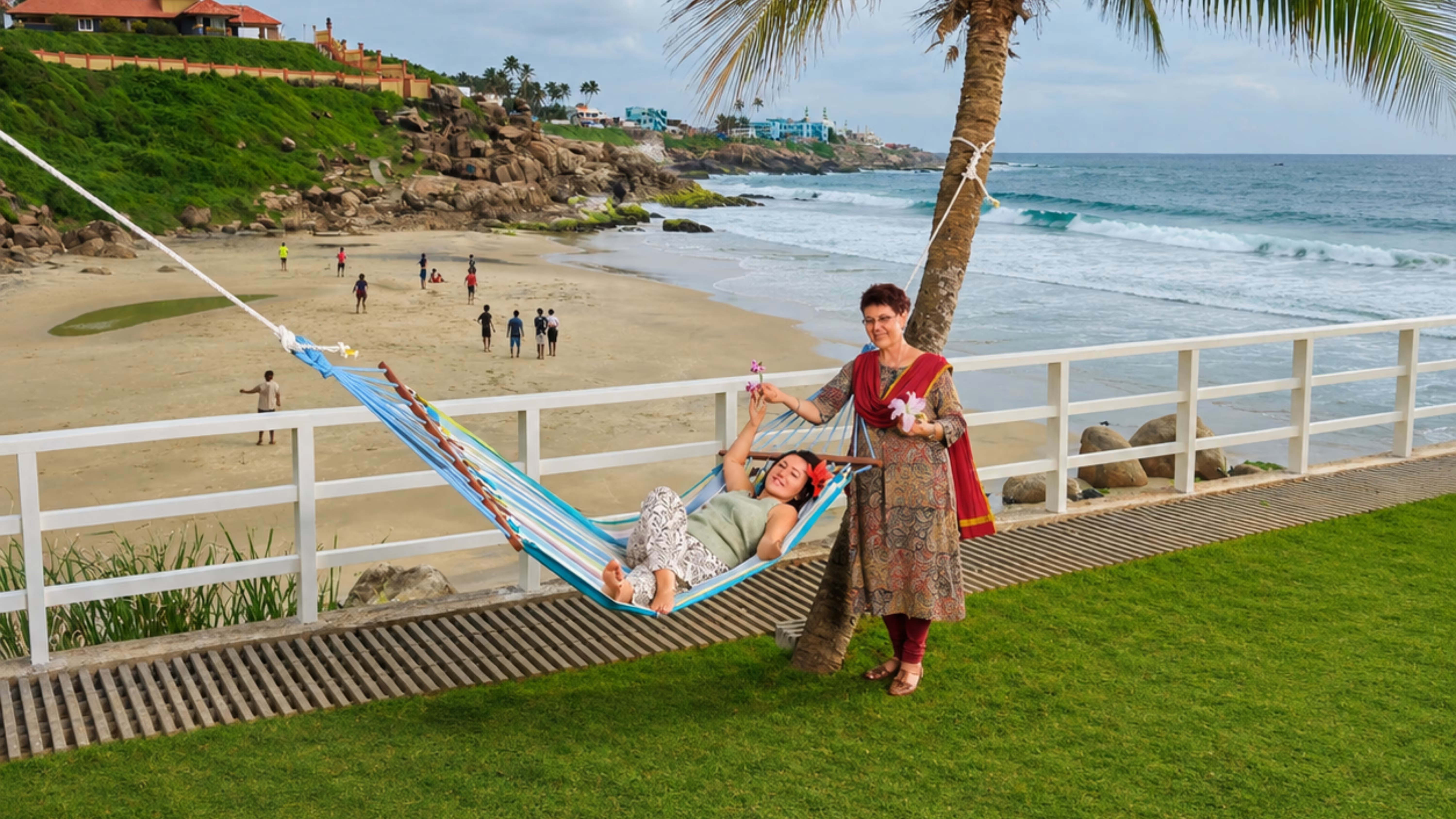
Sit in front of the ocean.
Gaze upon the sea.
Watch the waves arrive and disappear.
Listen to the wind moving through the palm trees.
Read a few pages.
Fall asleep.
Wake up.
Sit quietly again.
The irony is profound.
The treatment room lasts perhaps ninety minutes.
The healing continues for the other twenty-two and a half hours.
The downtime is not empty.
The downtime is the therapy.
The oil continues to work.
The nervous system continues to down-regulate.
Digestion resets.
Sleep deepens.
The mind slowly relinquishes its addiction to stimulation.
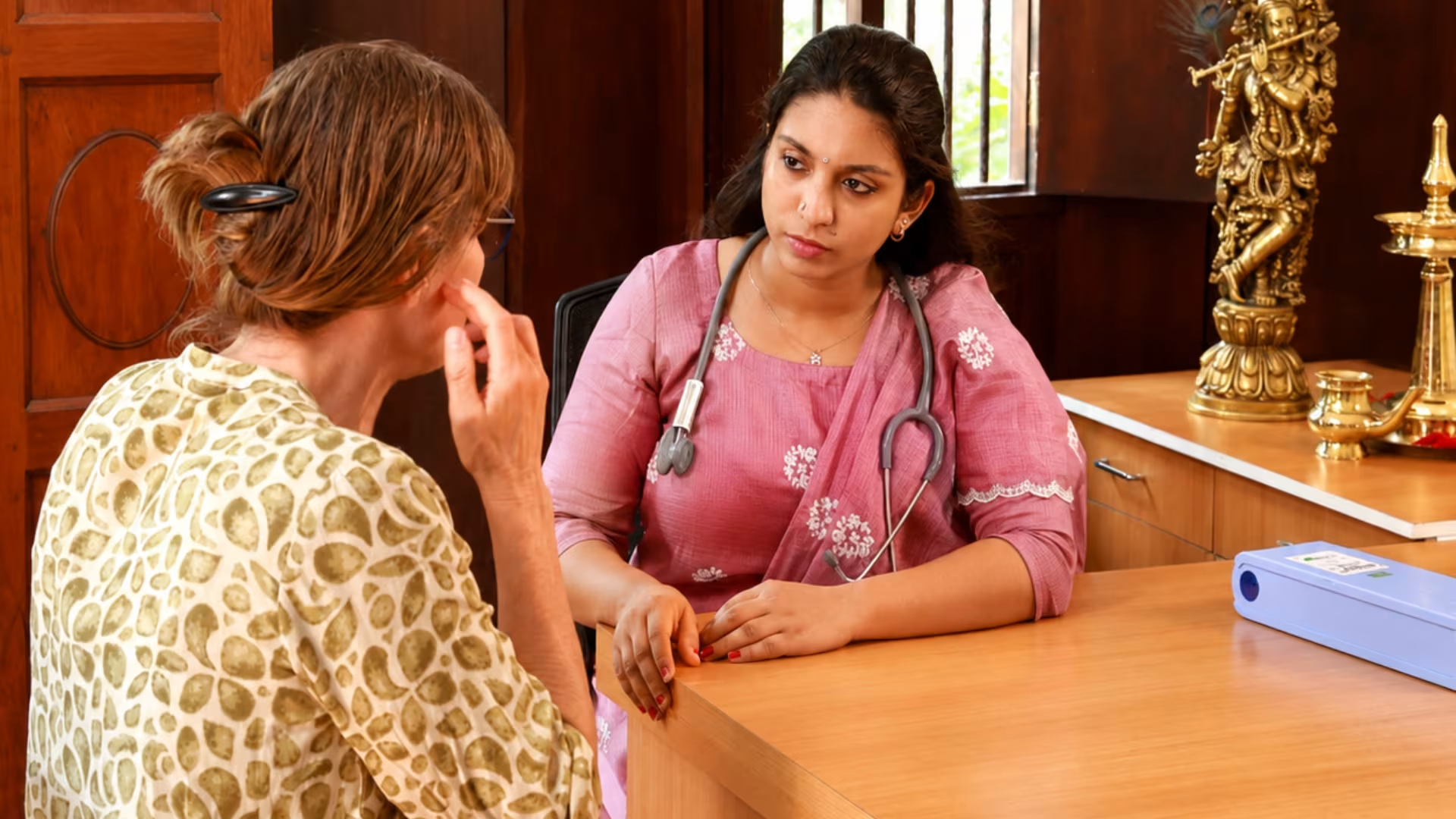
During Panchakarma, the body is already being asked to undertake a demanding internal process. Digestion is kindled. The senses are quietened. Ayurvedic treatments such as Abhyanga, Khizhi (bundle massage) and Snehapana (ghee drinking), together with many other therapies, aim to mobilize, loosen and eliminate what the body no longer needs. Panchakarma is not the time to impose additional physical stress upon the body and the mind. For Panchakarma to work at its deepest level, the body must rest and the mind must slow down.
The Italian expression il dolce far niente means the sweetness of doing nothing. It describes not merely inactivity, but the recovery of pleasure in unoccupied time—the ability to sit, observe and exist without needing to justify the moment through achievement.
Panchakarma asks us to rediscover this forgotten capacity.
Not merely the right to do nothing.
Not merely the freedom to do nothing.
But the joy and beauty of doing nothing.
Ayurveda understood something modern civilization forgot:

Healing requires space.
The treatments occupy only part of the day.
The rest of the day is not an empty space waiting to be filled.
It is the space in which the body absorbs the treatment, the nervous system settles and the mind gradually releases its addiction to stimulation.
The downtime is not separate from Panchakarma.
The downtime is part of Panchakarma.
Guilt vs. Freedom
The real battle is therefore not:
Work vs. Rest.
It is:
Guilt vs. Freedom.
Freedom means having permission to exist without constantly proving your worth.
Modern society increasingly equates value with productivity.
Ayurveda quietly disagrees.
It reminds us that a human being is not a human doing.
The Ayurooms Expression
One of the core Ayurooms theses:
The Doing Nothing Paradox
We spend our lives longing for free time, yet when we finally find it, we feel guilty for not filling it.
Panchakarma teaches that healing often happens not during the treatment itself, but in the quiet hours between treatments.
Sometimes doing nothing is the most important thing you can do.
We travel across the world seeking rest, only to discover that we no longer know how to receive it.
Chill out.
Rest.
Relax.
Do nothing.
It's not boredom.
It is time to recharge the batteries.
Join Us and Let’s Explore Together
Subscribe to our newsletter and be the first to access exclusive content and expert insights.
.avif)
