
The Spirit of Panchakarma: Beyond Detox, Towards Transformation

Panchakarma Tips for a Successful Detox Retreat
How to get the most out of Panchakarma

As a regular Panchakarma goer for more than ten years, I originally wrote this article to help Ayurooms clients prepare for their first Ayurvedic detox retreat.
Over the years, however, I have come to realise that the subject deserves more than a simple checklist.
Panchakarma is one of the most powerful healing systems in Ayurveda. But it is also widely misunderstood. Many people think of it as a massage holiday, a spa detox, or a relaxing wellness break. It can certainly be relaxing at times. But a proper Panchakarma is much deeper than that.
It is a medically supervised, highly personalized process of cleansing, strengthening, and rebalancing the body. Done properly, it can be life changing. Done casually, or in the wrong setting, it may deliver only superficial benefits.
I have experienced Panchakarma in different forms across India. I have spoken to many Ayurvedic doctors, resort owners, therapists, yoga teachers, and guests. I have also watched hundreds of Ayurooms clients go through their own healing journeys.
As I write this, I am doing a mini-10-day Panchakarma at Namaste Ayurveda in Mekkad, Kochi. Even during Panchakarma, I find myself working on Ayurooms, reflecting on Ayurveda, and thinking about how to help more people choose the right retreat for their health.
So this article is both personal and practical.
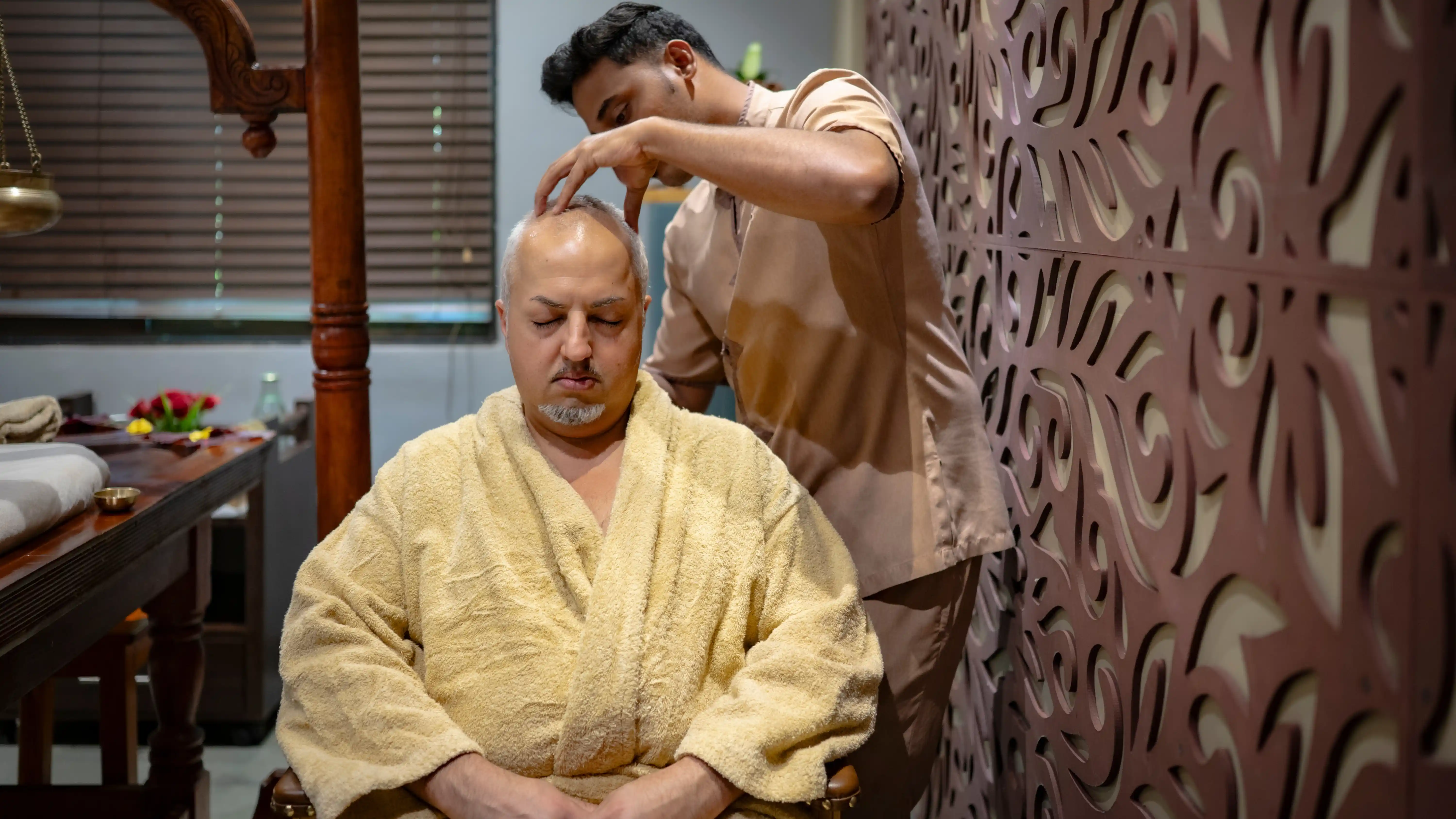
This blog was originally written for existing Ayurooms clients preparing for Panchakarma. However, it is also a useful guide for anyone considering a serious Panchakarma retreat and trying to better understand how Panchakarma is practiced.
What Is Panchakarma?
For the uninitiated, Panchakarma is a traditional Ayurvedic cleansing and rejuvenation process.
The Sanskrit word “Panchakarma” means “five actions” or “five procedures.” In classical Ayurveda, these procedures are used to remove accumulated toxins, rebalance the doshas, strengthen digestion, and help the body return to a healthier state.
In practical terms, Panchakarma is usually a residential wellness program done under the supervision of an Ayurvedic doctor. It may take place at an Ayurvedic hospital, Ayurveda resort, Ayurvedic retreat or specialised Panchakarma centre.
A proper Panchakarma program may include:

· Daily doctor consultations or health monitoring
· Ayurvedic body treatments
· Medicated oil therapies
· Herbal steam or heat therapies
· Internal cleansing procedures
· Special Ayurvedic diet
· Yoga, meditation, and rest
· Herbal medicines prescribed by the doctor
· A carefully managed post-treatment recovery phase
The exact treatment plan should never be generic. It should depend on your constitution, health history, age, digestion, strength, symptoms, medication history, and the doctor’s assessment.
This is one of the reasons why choosing the right Panchakarma retreat matters so much.
Panchakarma Is Not Practised the Same Way Everywhere

This is one of the most important points I can make.
Not all Panchakarma retreats are equal.
Some centers follow a more classical and medically rigorous approach. Some are gentle and resort-like. Some are excellent for first timers. Some are better suited to people who are willing to sacrifice comfort for deeper detoxification. Some have outstanding doctors but simple rooms. Other have beautiful rooms but a softer medical approach than expected.
There are also major differences in:
· Doctor supervision
· Treatment duration
· Therapist quality
· Diet discipline
· Use of medicated ghee
· Whether Virechana or Basti are properly administered
· How strictly the retreat manages caffeine, alcohol, sugar, and outside food
· Whether the environment supports rest or encourages sightseeing
· Whether the retreat is suitable for older guests, people with mobility issues, or people with specific health conditions
This is where Ayurooms plays an important role.
We are not simply selling rooms at Ayurveda resorts. We help clients understand which retreat is right for their body, their goals, their budget, their comfort expectations, and their travel dates.
The “best Panchakarma retreat” is not the same for everyone.
For one person, the best retreat may be a luxury seaside Ayurveda resort in Kerala. For another, it may be a strict Ayurvedic hospital with very simple accommodation. For someone else, it may be a quiet, doctor-led homestay where the food is simple and the healing is deep.
The right match matters.
How Often Should Panchakarma Be Done?
For best results, Panchakarma should ideally be done once a year.
If your goal is maximum longevity and maximum quality of life into old age, I believe Panchakarma deserves a permanent place in your annual health routine.
Many of us service our cars more regularly than we service our bodies. We change the oil, check the tyres, inspect the engine, and make sure the vehicle is roadworthy.
But the body is the real vehicle.
As we age, the body accumulates stress, inflammation, poor digestion, fatigue, emotional heaviness, and the wear and tear of modern life. Panchakarma gives the body a structured opportunity to cleanse, reset, and rebuild.
This becomes even more important for people in their 50s,60s, 70s, and beyond.
If you have worked hard, raised families, built businesses, carried responsibilities, travelled constantly, eaten irregularly, slept poorly, or lived under prolonged stress, Panchakarma may be one of the most meaningful investments you can make in your remaining years of active life.
How Long Should a Panchakarma Retreat Be?
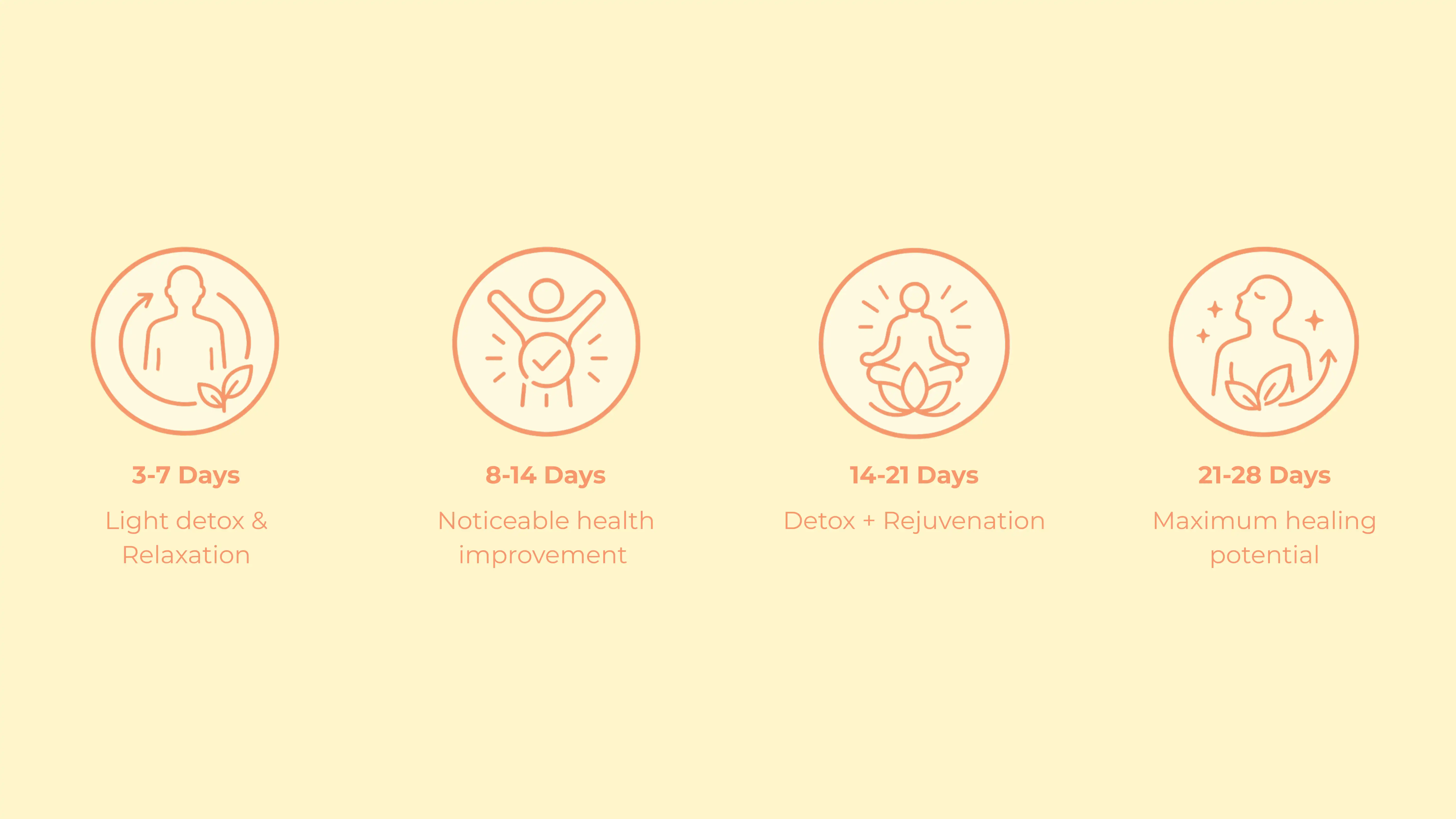
The length of your stay matters enormously.
At Ayurooms, many clients ask whether 5, 7, 10, 14, or 21days is enough. The honest answer depends on your goals.
3 to 7 Days: A Taste of Ayurveda
A stay of 3 to 7 days can be enjoyable and useful, but it is usually not enough for a proper Panchakarma.
Short stays are best understood as an introduction to Ayurveda. You may experience stress relief, better sleep, lighter digestion, and a sense of calm. But deep detoxification is limited.
There are some places where a more accelerated detox can be attempted in a short period, but this usually requires discipline and may involve some sacrifice in comfort.
8 to 14 Days: A Serious Beginning
A stay of 8 to 14 days gives the doctor more time to work with the body.
This duration can support meaningful detoxification, especially if the guest is disciplined with diet, rest, medicines, and treatment protocols.
However, for deeper rejuvenation and rebuilding, 14 days may still feel short.
14 to 21 Days: The Sweet Spot for Most People
For many Ayurooms clients, 14 to 21 days is the most practical and effective window.
It allows time for preparation, cleansing, and some degree of rejuvenation. This is especially useful for people dealing with fatigue, stress, digestive issues, weight concerns, mild chronic ailments, or general health decline.
At Ayurooms, about 70% of our clients stay between 14 and 21days.
21 to 28 Days: Deeper Healing
For chronic issues, stronger detoxification, weight loss, metabolic reset, or more serious rejuvenation, 21 to 28 days is usually better.
This gives the doctor more time to observe how the body responds and to adjust the treatment plan accordingly.
If you are travelling a long distance, and if your health is a serious priority, I would strongly encourage you to consider 21 days or more.
Who Should Consider Panchakarma?
Panchakarma may be appropriate for you if you feel depleted, fatigued, physically weak, stressed, burnt out, inflamed, heavy, or out of balance.
It may also be worth considering if:
· Your digestion is poor
· Your sleep is disturbed
· You have nagging aches and pains
· You feel older than your actual age
· You are recovering from prolonged stress
· You feel emotionally stuck
· You have gained weight and cannot easily lose it
· You feel your health is not on track but do not know why
· You want to age with strength, clarity, and dignity
Many people come to Panchakarma after years of ignoring small warning signs.
A little knee pain. A stiff back. Poor sleep. Bloating. Weight gain. Brain fog. Irritability. Low energy. Dependence on caffeine. A feeling that the body is no longer responding as it once did.
Panchakarma is not a magic wand. But it can be a powerful turning point.
My Top Tips for Panchakarma Success

Here are my most important tips for getting the best results from your Panchakarma retreat.
These are not theoretical. They come from personal experience, from observing Ayurooms clients, and from learning from Ayurvedic doctors across India.
1. Be Completely Forthcoming with the Doctor
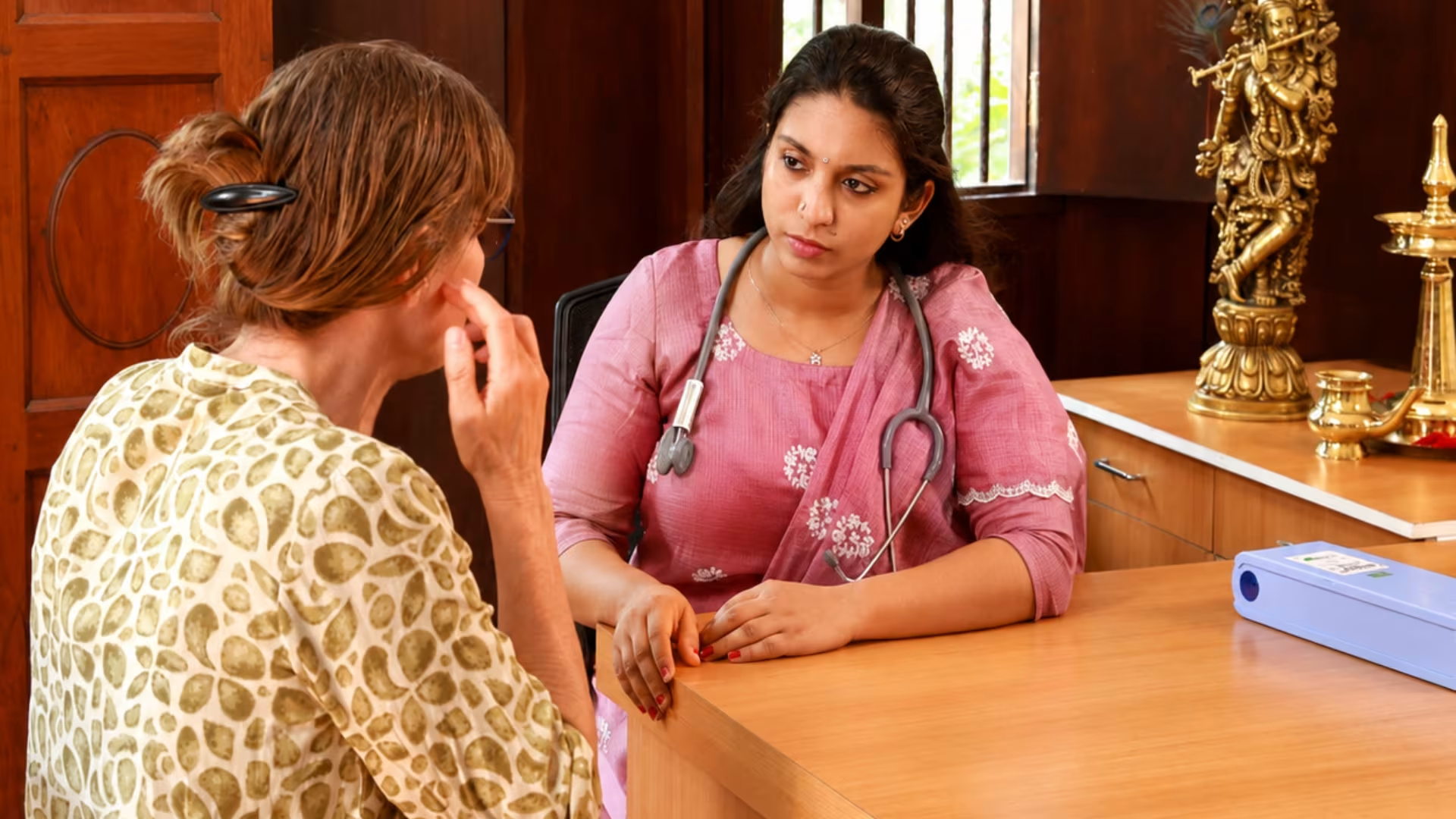
Your first consultation is extremely important.
Share as much information as possible with the Ayurvedic doctor. Be clear about your goals, health history, allergies, current medications, surgeries, addictions, digestion, sleep, bowel movements, stress levels, emotional health, aches, pains, and lifestyle.
Do not hide things out of embarrassment.
If you drink alcohol regularly, say so. If you are dependent on coffee, say so. If you are taking medication, disclose it. If you have constipation, anxiety, trauma, insomnia, or food cravings, mention it.
The more the doctor knows, the better the treatment plan can be.
Panchakarma is personalized medicine. But it can only be personalised properly if the doctor has the full picture.
2. Follow the Doctor’s Advice
This sounds obvious, but many guests struggle with it.
A good Ayurvedic doctor may ask you to change your diet, avoid certain foods, take medicines at specific times, rest more, avoid exercise, stop caffeine, or reduce talking and stimulation.
Please follow the instructions.
During Panchakarma, discipline matters. The results are often directly connected to the seriousness with which you follow the program.
You have travelled a long way. You have taken time out of your life. You have invested money in your health.
Do not sabotage the process by treating the doctor’s advice as optional.
3. Understand That Things May Get Worse Before They Get Better
Panchakarma is not always easy.
As the body starts detoxifying, old symptoms can temporarily flare up. You may feel tired, emotional, irritated, heavy, restless, orientally foggy. You may have strange dreams. You may feel like leaving. You may wonder why you came.
This can be part of the process.
The body detoxes. The mind detoxes. Emotions detox.
Temper tantrums can happen. Frustration can rise. Old memories can come up. The nervous system may resist slowing down.
Keep the faith.
Things often get better after the difficult phase passes.
4. Let the Caffeine Go
For many people, this is one of the hardest parts.
Panchakarma offers a much-needed break from chai, coffee, cappuccinos, Americanos, energy drinks, cold drinks, and constant stimulation.
This gives your inner batteries a chance to recharge without artificial support.
If the doctor permits some form of herbal drink, follow that guidance. But do not assume that your morning coffee habit belongs inside Panchakarma.
You can go back to coffee after your retreat if you wish, but during Panchakarma, give your body the chance to reset.
5. Sip Warm Water Throughout the Day
Warm water is one of the simplest and most important supports during Panchakarma.
Depending on the doctor’s advice, you may be asked to sip hot water, Ayurvedic water, ginger water, cumin water, coriander water, sariva water, or other herbal preparations.
Do not gulp large amounts of cold water.
Sip slowly throughout the day.
In Ayurveda, warm water supports digestion, circulation, and detoxification. It is a small habit, but it can make a big difference.
6. Take a Digital Detox

We all check our phones too much.
During Panchakarma, this becomes even more obvious. The body is trying to slow down, but the mind keeps reaching for stimulation.
Email. WhatsApp. Instagram. News. Markets. Politics. Business. Family drama. Work issues.
The phone pulls you out of the healing process.
I am not saying you must disappear completely. Many of us have responsibilities. Even as I write this during my own mini Panchakarma in Kochi, I am still working on Ayurooms.
But reduce the damage.
Create fixed windows for checking messages. Avoid looking at your phone first thing in the morning. Try to spend the first two or three hours of the day without digital input. Give loved ones the retreat’s reception number for emergencies.
The more you reduce screen time, the more you can focus on yoga, gratitude, walking, silence, prayer, journaling, reading, and rest.
Healing requires attention.
Do not give all your attention to the phone.
7. Start a Gratitude Practice
Gratitude is a powerful healer.
During Panchakarma, I recommend writing down ten things each day that you are grateful for.
Nothing is too small.
Be grateful for your eyes. Your hands. Your legs. Your breath. Your digestion. Your family. Your teachers. Your home. Your ability to travel. Your opportunity to heal.
If you cannot feel gratitude at first, simply observe what comes up.
Sometimes gratitude arrives quietly.
Sometimes it releases sadness.
Sometimes it reminds us that, despite everything, much is still working.
Panchakarma is not only about removing toxins from the body. It is also about softening the mind.
8. Avoid Incessant Talking, Complaining, and Heavy Conversations
The words we speak and the thoughts we think are connected.
During Panchakarma, it is best to speak less.
This does not mean you must be anti-social. By all means, enjoy meaningful conversations with other guests. Cultural exchanges can be beautiful. Many lifelong friendships begin at Ayurveda retreats.
But keep things light.
Avoid politics. Avoid business stress. Avoid financial arguments. Avoid gossip. Avoid complaining. Avoid telling the same painful story again and again.
Go inward.
Sometimes we travel thousands of miles for healing, only to recreate the same mental noise we were meant to escape.
9. Drink Medicated Ghee If the Doctor Recommends It
This may be the most controversial tip.
If the doctor recommends Snehapana, or the drinking of medicated ghee, do not be afraid of it.
Ghee is deeply respected in Ayurveda. The process may not be pleasant. The taste, smell, and texture can be difficult. But if prescribed correctly, medicated ghee can play an important role in preparing the body for detoxification.
I often compare it to changing the oil in a car.
Your body also needs lubrication, cleansing, and renewal.
That said, this is not medical advice. Snehapana should only be done under proper Ayurvedic medical supervision. It is not something to casually attempt at home after reading a blog.
Only after several full Panchakarmas, and only with doctor guidance, should anyone even consider doing a version of Snehapana outside a clinical or retreat setting.
Do not be afraid of ghee.
But respect it.
Why the Right Panchakarma Retreat Matters
The retreat you choose can make or break your Panchakarma.
A beautiful resort is not enough. A famous name is not enough. A low price is not enough. Even a long treatment menu is not enough.
You need to understand what kind of Panchakarma is actually being offered.
Some questions matter:
· Who is the doctor?
· How much time will the doctor spend with you?
· Are treatments personalised or standardised?
· How long are the daily treatments?
· Is the diet strict or flexible?
· Is the environment quiet enough for healing?
· Is the retreat suitable for your age and mobility?
· Are you looking for luxury, medical intensity, or a balance of both?
· Is the location appropriate for the season you are travelling?
· Will you be comfortable enough to stay for 14,21, or 28 days?
This is where Ayurooms helps.
We know the difference between a soft wellness holiday and a serious Panchakarma retreat. We know which resorts are better for first timers, which are better for deeper detox, which are more suitable for older guests, which have stronger doctors, and which offer the right balance of comfort and authenticity.
Our role is not to push one resort.
Our role is to help you choose wisely.
Panchakarma in India and Beyond: Why Travellers Need Guidance
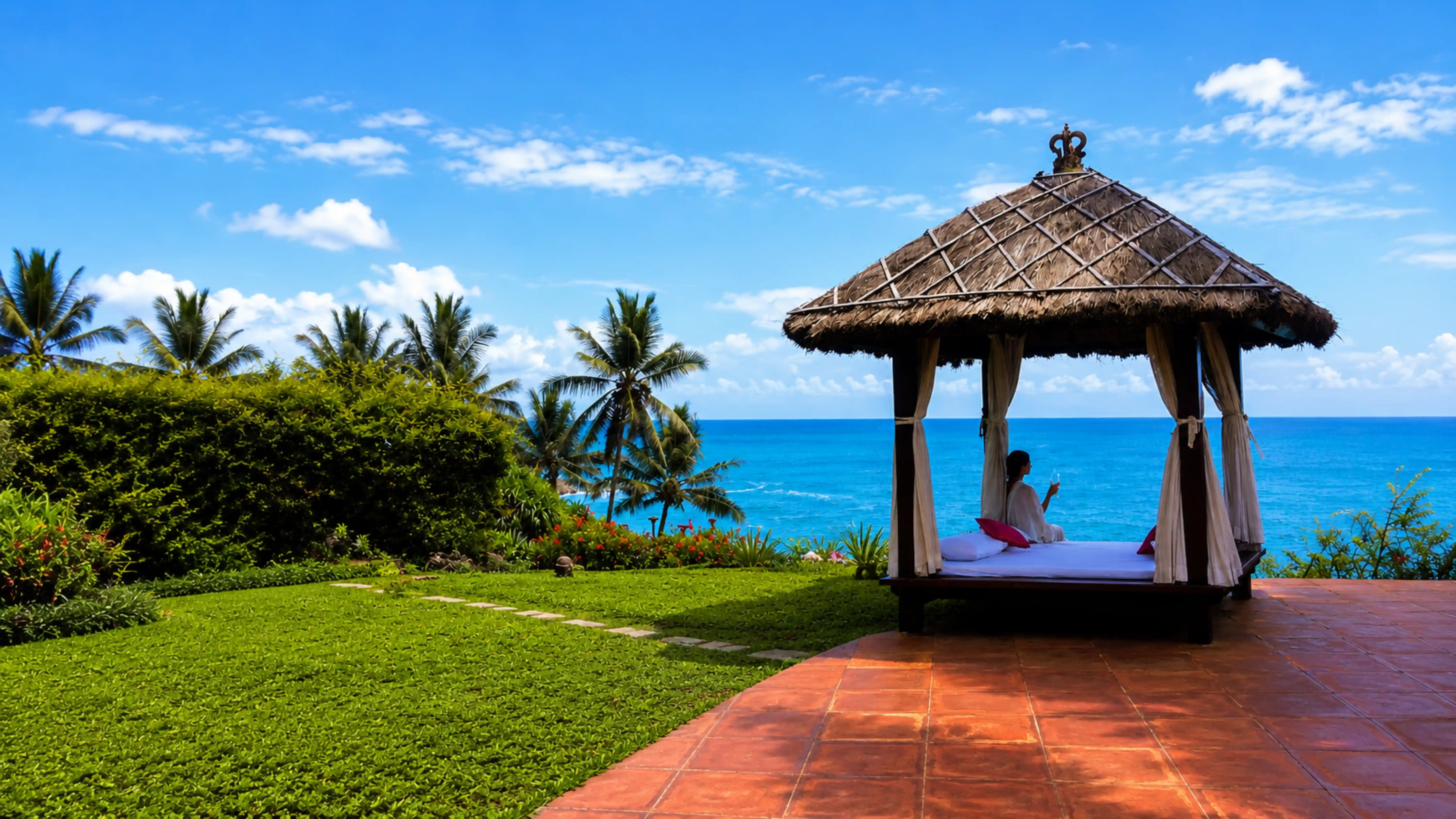
India has some of the finest Ayurveda retreats in the world. Kerala, in particular, has become one of the leading destinations for Panchakarma and Ayurvedic healing.
But Panchakarma is not limited to India. The same principles apply wherever Panchakarma is practiced seriously, whether in India, Sri Lanka, Thailand, Germany, or another part of the world.
The choice can be confusing.
A traveler searching online for “best Panchakarma retreat "or “best Ayurveda resort” may find dozens of options. Many websites use the same words: authentic, traditional, holistic, detox, rejuvenation, healing, luxury.
But the actual experience can vary dramatically.
One retreat may be ideal for weight loss. Another may be better for stress and burnout. Another may be suited to chronic pain. Another may be too steep or physically demanding for someone with knee problems. Another may look luxurious online but offer a softer treatment program than expected.
This is why Ayurooms exists.
We help travelers make informed decisions based on real knowledge of the retreats, the doctors, the treatment styles, the rooms, the terrain, the food, the season, and the type of guest experience each place provides.
For a serious Panchakarma, this guidance matters.
Panchakarma Is Not a Regular Holiday
This is worth saying clearly.
Panchakarma is not a normal vacation.
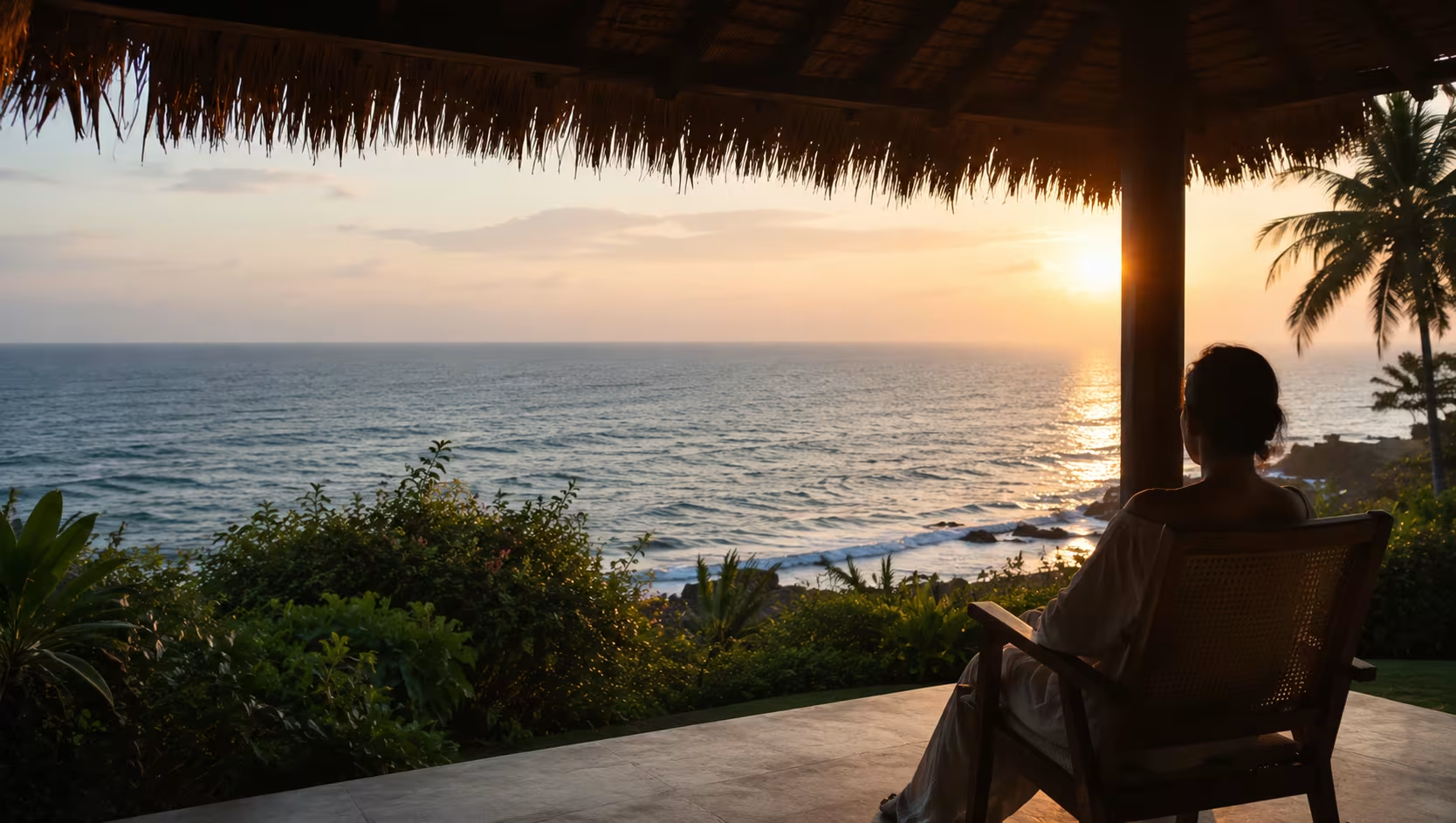
You may be near the beach. You may be in a beautiful resort. You may have a lovely room. You may enjoy warm hospitality and peaceful surroundings.
But the purpose of the trip is healing.
That means your day may revolve around doctor consultations, treatments, medicines, simple food, rest, yoga, and sleep.
You may not feel like sightseeing. You may not want rich food. You may need silence. You may need to rest after treatments. You may need to let go of your usual habits.
This is not a failure of the holiday.
This is the holiday doing its real work.
After Panchakarma: Do Not Rush Back Into Old Habits
The days after Panchakarma are important.
In Ayurveda, post-treatment care is known as Paschat Karma. This phase helps the body stabilise after detoxification.
Your doctor may advise you to:
· Eat simple food
· Avoid alcohol
· Avoid heavy exercise
· Avoid cold foods and drinks
· Continue herbal medicines
· Sleep early
· Reintroduce foods gradually
· Maintain yoga or gentle movement
· Protect your digestion
Many people feel wonderful after Panchakarma and immediately rush back into coffee, alcohol, late nights, work stress, heavy meals, and digital overload.
Try not to do this.
The retreat opens a door. Your daily routine determines whether you walk through it.
Final Thoughts: Panchakarma Can Change the Direction of Your Health
Panchakarma is not always easy. There may be difficult days. The mind has its own way of detoxing. The body may resist. Old habits may call you back.
But if you stay with the process, Panchakarma can be deeply rewarding.
For me, it has become an annual discipline, a reset, and a reminder that health is not something to be postponed until the body breaks down.
For many Ayurooms clients, Panchakarma becomes a turning point. They arrive tired, inflamed, anxious, overweight, depleted, or simply disconnected from themselves. They leave lighter, clearer, calmer, and more hopeful.
Not cured of everything.
Not magically transformed overnight.
But reoriented.
And sometimes, that is the beginning of everything.
If you are considering Panchakarma and are unsure which retreat is right for you, Ayurooms can help you make a thoughtful, informed decision.
Because in Panchakarma, the right place, the right doctor, the right duration, and the right guidance can make all the difference.
Panchakarma FAQs
What is Panchakarma?
Panchakarma is a traditional Ayurvedic detoxification and rejuvenation process designed to cleanse the body, strengthen digestion, balance the doshas, and support long-term health. It is best done under the supervision of an experienced Ayurvedic doctor.
How many days are needed for Panchakarma?
For a proper Panchakarma, 14 to 21 days is usually a good starting point. A 7-day stay can offer stress relief and a taste of Ayurveda, but deeper detoxification usually requires more time. For chronic issues or deeper rejuvenation, 21 to 28 days is often better.
Is Panchakarma suitable for older travellers?
Yes, Panchakarma can be very valuable for older travelers, especially those focused on longevity, mobility, digestion, sleep, stress reduction, and quality of life. However, the retreat must be chosen carefully based on health condition, mobility, terrain, treatment intensity, and comfort requirements.
Is Panchakarma the same at every Ayurveda retreat?
No. Panchakarma varies greatly from one retreat to another. Some centers are medically rigorous, while others are more resort-like and gentle. Treatment duration, doctor involvement, diet discipline, therapy quality, and detox intensity can differ significantly.
Can I do Panchakarma for only 7 days?
You can do a short Ayurveda program for 7 days, but it is usually not a full Panchakarma. A 7-day stay may help with relaxation, mild detox, and stress relief. For deeper cleansing and rejuvenation, a longer stay is recommended.
Will I have to stop coffee during Panchakarma?
In most serious Panchakarma programs, the doctor will advise you to stop coffee and caffeine. This allows the nervous system and digestion to reset. Some retreats may be more flexible, but for best results, it is wise to take a break from caffeine.
Is medicated ghee necessary in Panchakarma?
Medicated ghee, or Snehapana, may be recommended in some Panchakarma programs. It should only be taken under proper Ayurvedic doctor supervision. Not every guest will require it, and the doctor will decide based on your condition and treatment plan.
How do I choose the best Panchakarma retreat?
The best Panchakarma retreat depends on your health goals, budget, age, comfort expectations, preferred location, travel dates, and required level of medical supervision. Ayurooms helps travelers compare authentic Ayurveda retreats and choose the one most suitable for their needs.
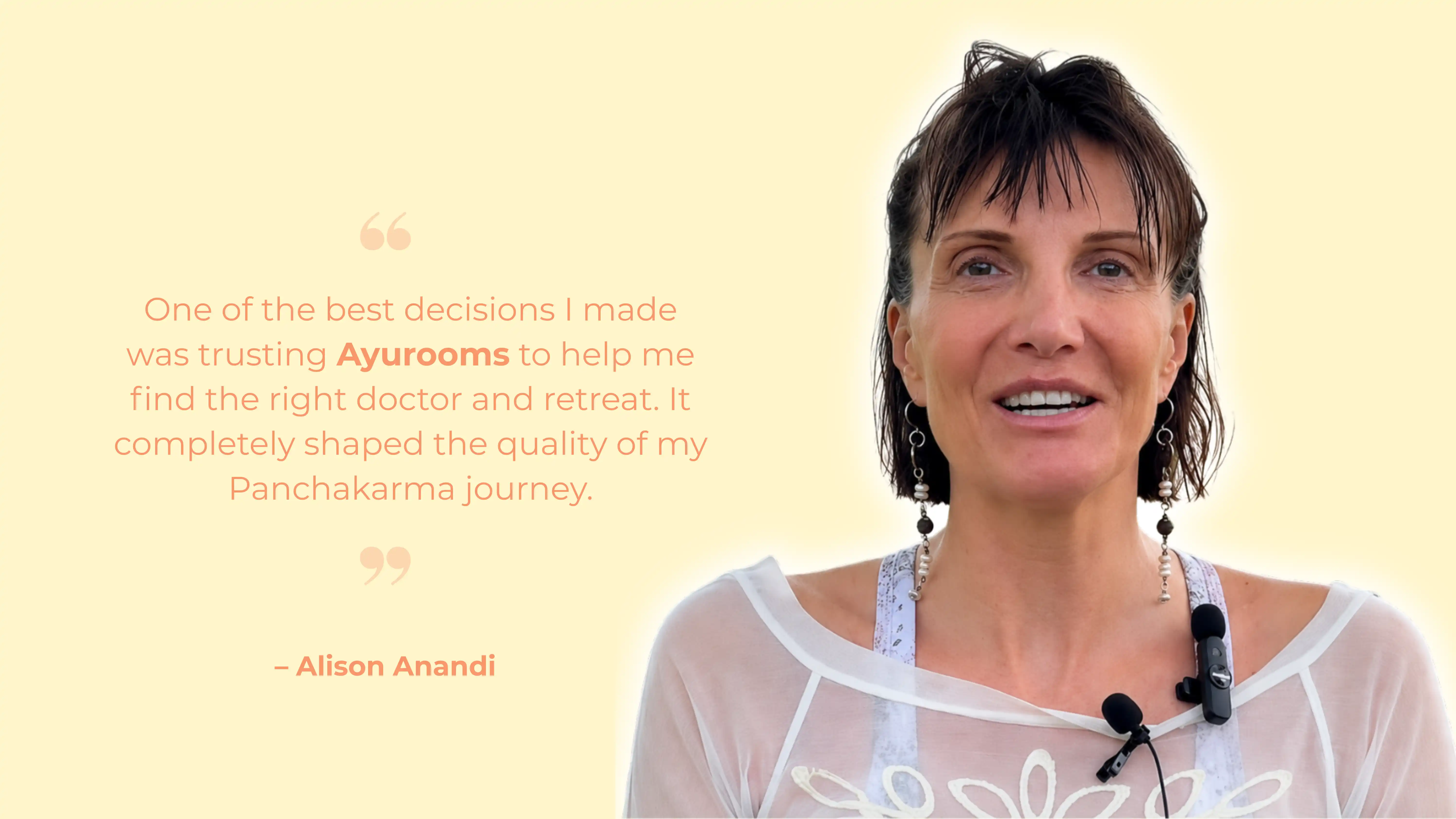
Why book Panchakarma through Ayurooms?
Ayurooms helps you choose the right Ayurveda retreat based on real knowledge of the resorts, doctors, treatment styles, room categories, terrain, seasonality, pricing, and guest experience. Our goal is to match you with the retreat most likely to serve your health and wellness objectives.
Join Us and Let’s Explore Together
Subscribe to our newsletter and be the first to access exclusive content and expert insights.
.avif)